 US
US
 MX
MX

What is bottoming out?
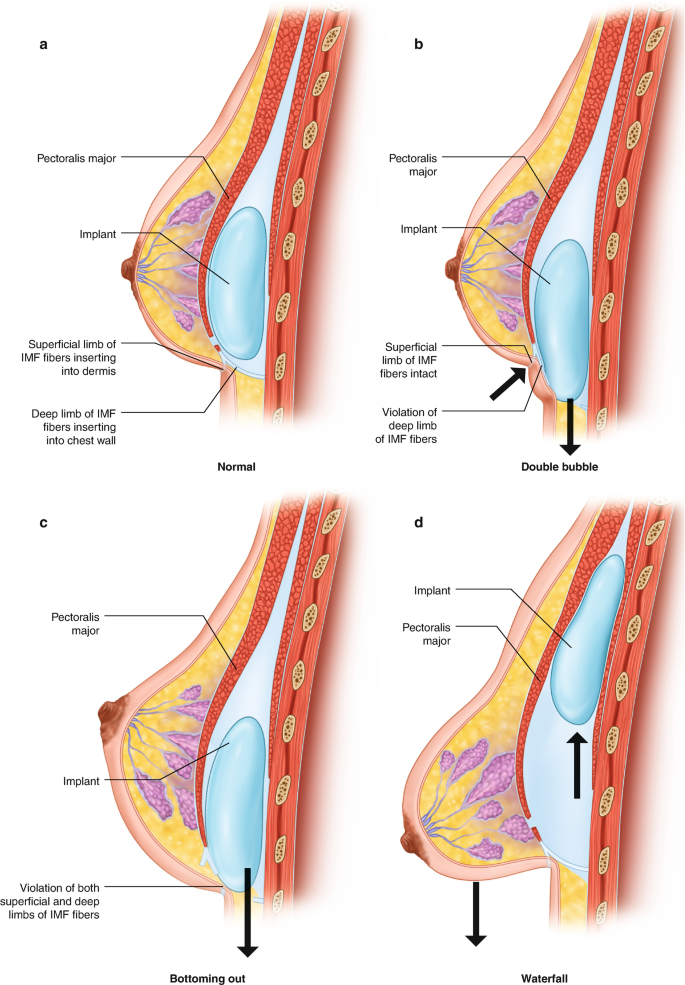
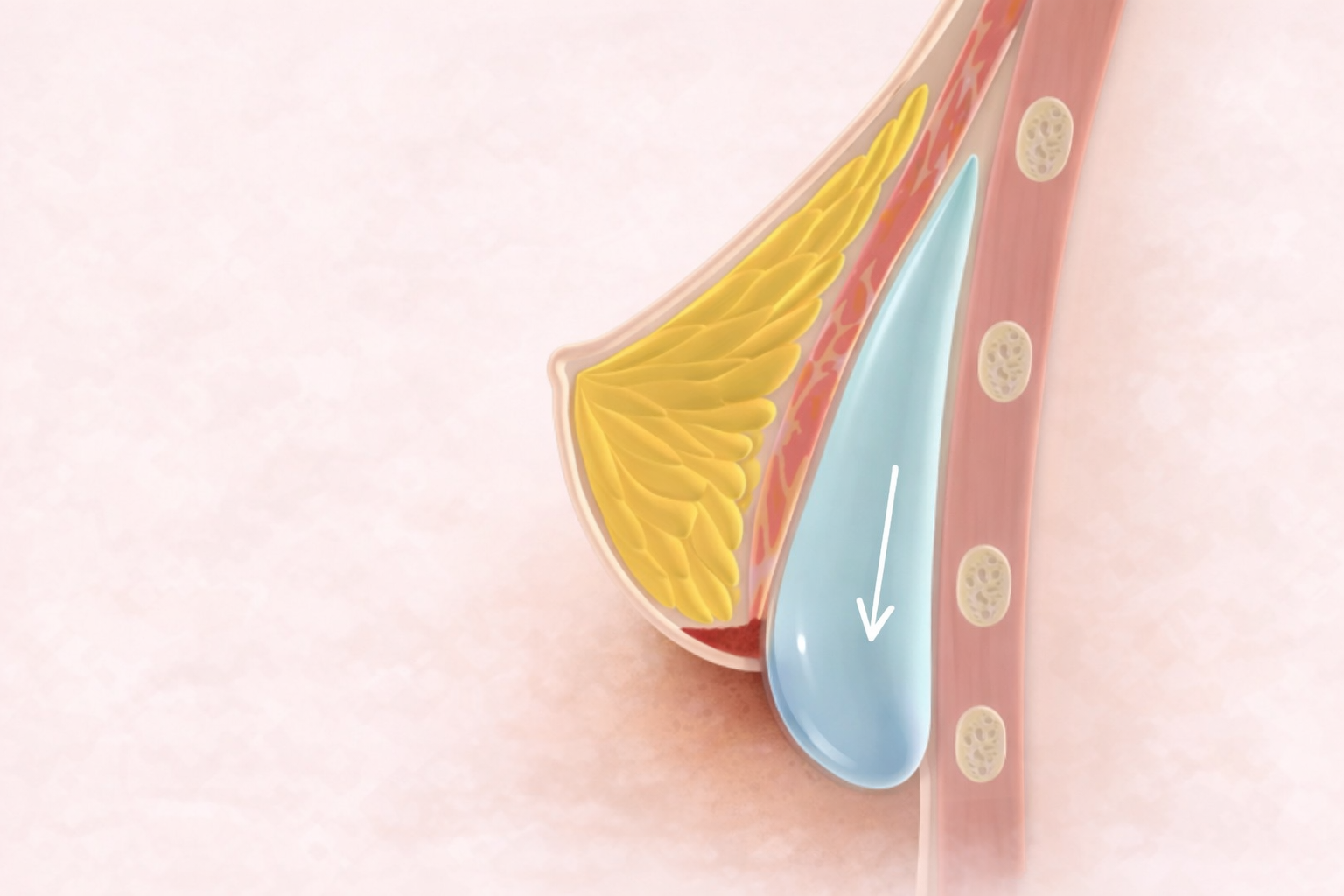
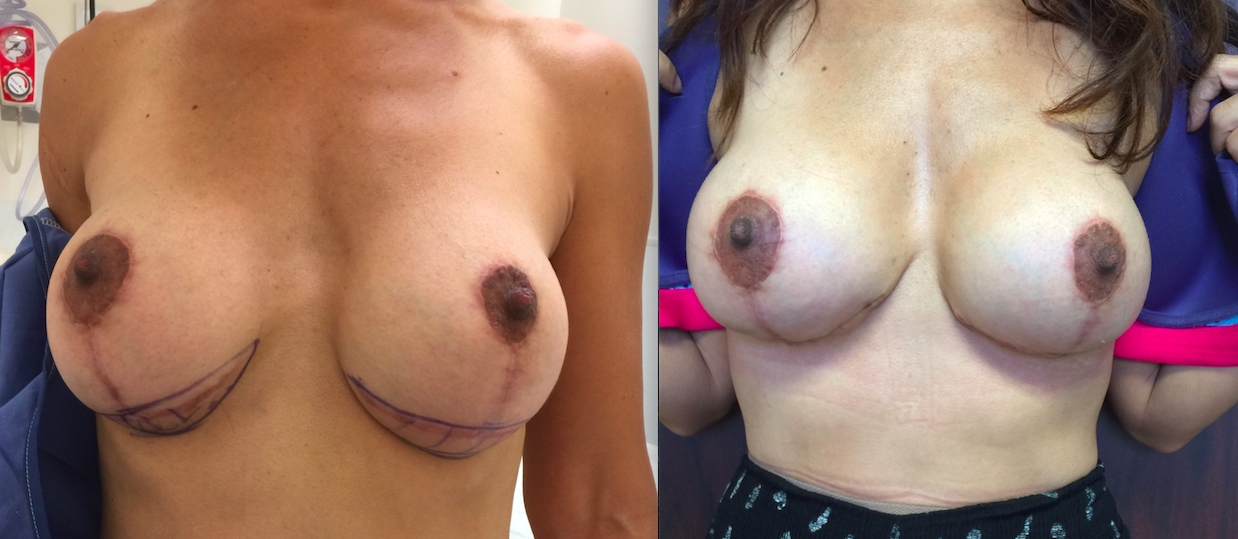
Bottoming out occurs when a breast implant descends below the original inframammary fold.
This leads to a very characteristic aesthetic change:
- An excessively elongated lower pole
- A nipple that appears too high
- Loss of fullness in the upper pole
- Loss of the inframammary fold
In simple terms:
the breast loses its support and the implant drops downward.
Why does it happen? (the real cause)
When we talk about bottoming out, many patients think the problem is the implant—but the reality is different: the real issue is the support of the breast. The implant simply responds to gravity and to the quality of the tissue holding it in place. If that support is weak, it will eventually fail.
The most important factor is tissue quality. Patients with thin skin, post-pregnancy laxity, or significant weight loss have a much lower capacity to support an implant over time. Even if the tissue looks good initially, it often lacks the strength needed to maintain implant position long term. It’s like hanging weight on fragile fabric: it may hold at first, but eventually it gives way.
A second factor is purely technical: over-dissection of the inframammary fold. If the fold is excessively released during surgery or the pocket is created too low, one of the breast’s key natural support structures is lost. At that point, the implant no longer has a true lower boundary and begins to migrate downward. This is a mistake that may not be obvious in the operating room, but becomes evident weeks or months later.
The third factor is implant weight. Larger or heavier implants create a constant downward force. And here there is no negotiation—gravity always wins. When a heavy implant is combined with weak tissues or a technique that compromised the fold, the outcome is predictable: the implant descends.
That’s why bottoming out is not a random event or bad luck. It is the result of a combination of factors: tissues that cannot withstand the load, a technique that does not respect anatomical support, and excessive weight on the breast structure. Understanding this is critical, because it also determines how it should be corrected. If the support is not rebuilt, the problem will simply come back.
How does it appear clinically?
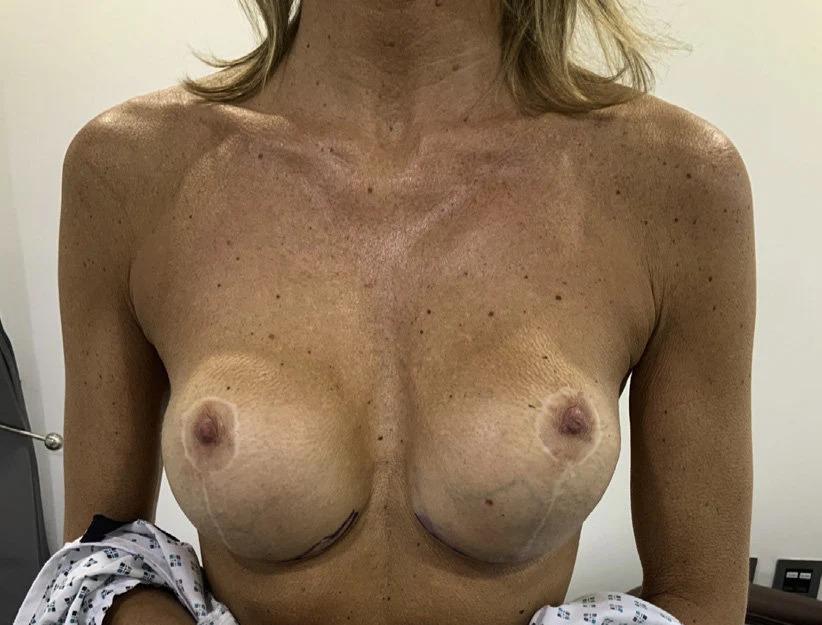
In cases of bottoming out, one of the most characteristic findings is an increased distance between the nipple and the inframammary fold, indicating that the implant has descended below its ideal position. This is often accompanied by a downward displacement of the fold itself, which loses its original anatomical location and leads to a clear alteration in the breast’s architecture.
Clinically, asymmetry between the breasts may also be observed, along with a loss of fullness in the upper pole. This creates the appearance of a sagging breast, even when the implant is of adequate or even large volume. This point is critical: the issue is not a lack of volume, but rather poor implant positioning secondary to loss of support.
From a practical standpoint, this condition can be classified as mild, when changes are subtle and the fold still partially maintains its structure; moderate, when the deformity is clearly visible and implant descent is evident; and severe, when there is complete loss of support with significant structural deformity of the breast.
Treatment: beyond sutures
When bottoming out occurs, it is often addressed using internal sutures alone, such as capsulorrhaphy or by repositioning the inframammary fold. In theory, this makes sense: you close the space and lift the implant back up. The problem is that this works well on paper… but not always in real life.
If the patient has weak tissues, those sutures are trying to support something the body itself cannot sustain. It’s like repairing a damaged wall with plaster without reinforcing the structure: it may look good at first, but over time it fails again.
That’s why, in many cases—especially in patients with thin skin, prior surgeries, or heavy implants—recurrence is common. The implant descends again because the root cause was never addressed: the lack of true structural support.
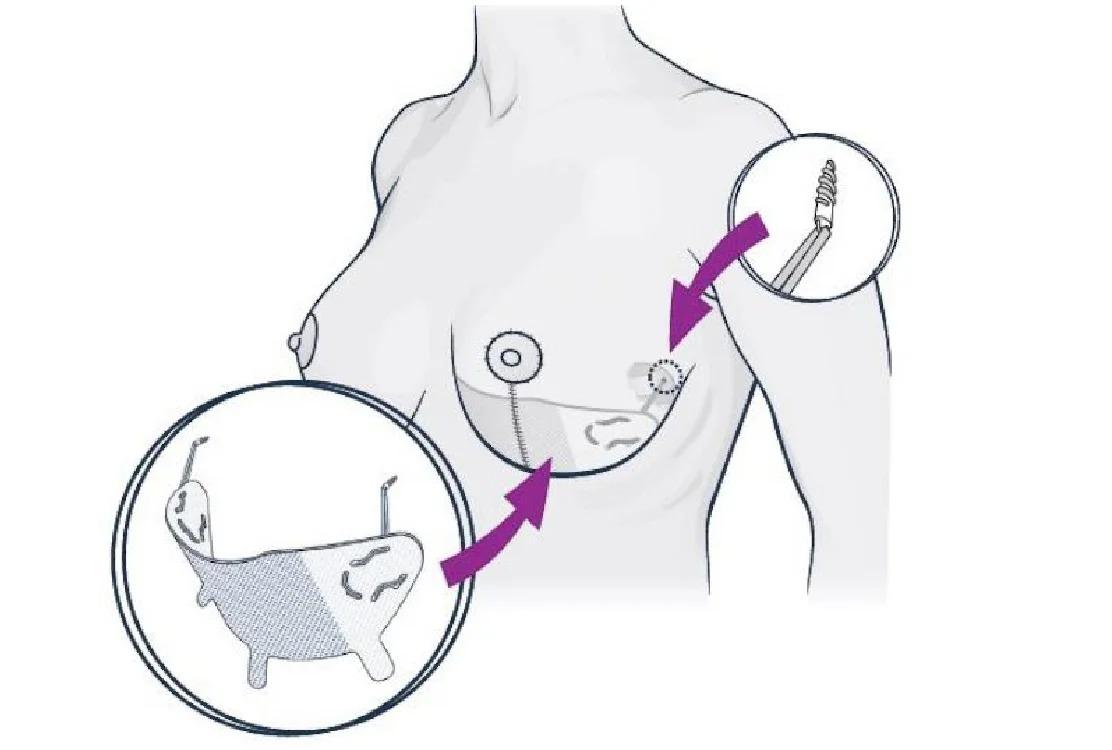
This is where the approach changes completely. It’s no longer just about “closing” the pocket, but about rebuilding the breast’s support system. That’s what the so-called internal bra does: it creates an additional support structure that helps maintain the implant in the correct position over the long term.
In other words, it’s not just about repositioning the implant… it’s about giving it a system that can actually hold it in place.
When is an internal bra indicated?
- Inframammary fold disruption
- Moderate to severe bottoming out
- Revision breast surgery
- Poor tissue quality
- Large or heavy implants
- Previous failed correction
When bottoming out occurs, many attempt to correct it using only internal sutures to lift the implant. The problem is that this often fails over time. Why? Because the sutures are trying to support something the patient’s own tissue cannot sustain.
If the skin is thin, there is laxity, or there have been prior surgeries, the natural support of the breast is already weakened. So even if the result looks good at first, gravity and the weight of the implant eventually take over—and the implant drops again.
That’s why the correct approach is not just to reposition the implant, but to rebuild the support. This is where the “internal bra” comes in: a mesh that reinforces the inframammary fold and helps keep the implant in place.
In simple terms:
it’s not just about lifting the implant… it’s about preventing it from dropping again.
If you notice that your implants have changed position, your breasts look “saggy,” or the volume has shifted downward, don’t ignore it. This is not normal and, more importantly, it will not correct itself.
In many cases, the problem is not the implant, but the lack of internal support. And if it’s not properly addressed, it will continue to progress.
The good news is that there is a solution—but it requires a specialized evaluation to understand the real cause and choose the right treatment from the start.
Because this is not just about improving shape…
it’s about doing it right and achieving results that last.
Has this post been useful to you?
